
“Chipley in WWII: Stories from the Front.”


“Over There and Here at Home: Chipley in WWI”


“Troup Factory Mill“
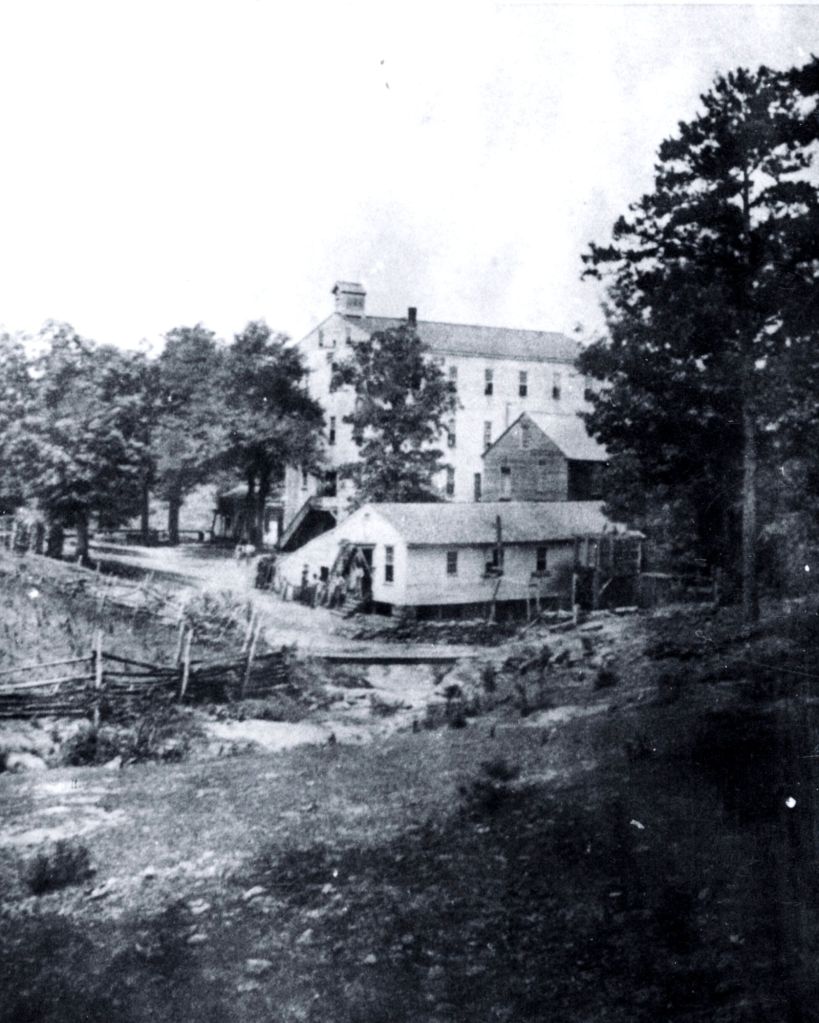
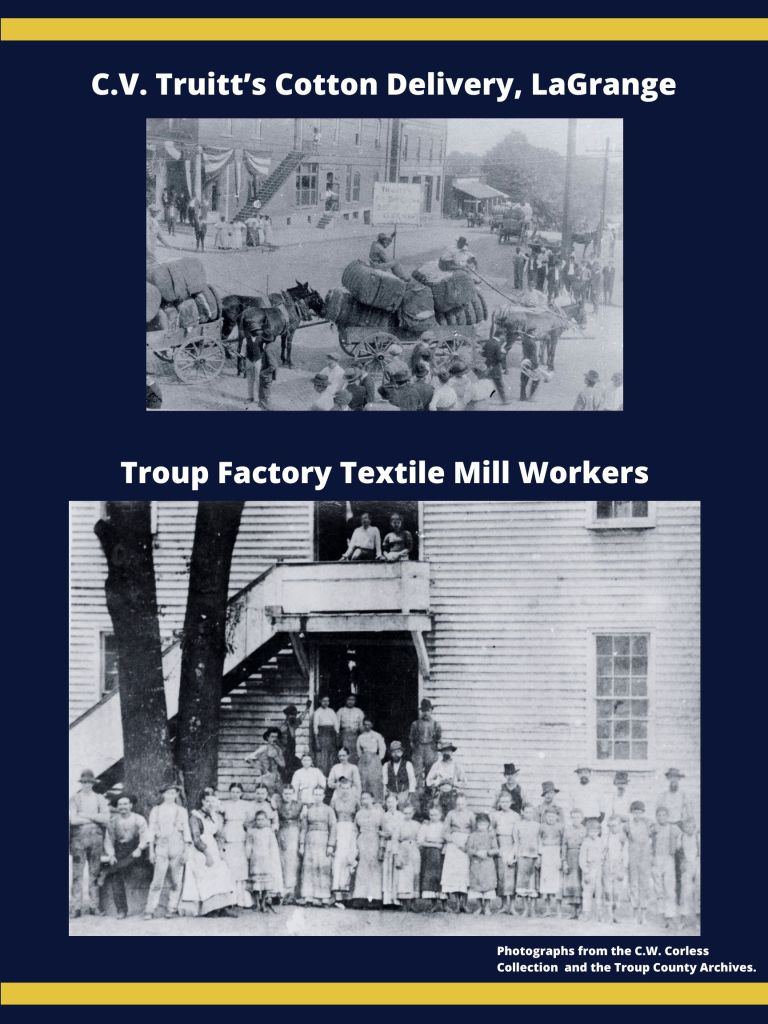

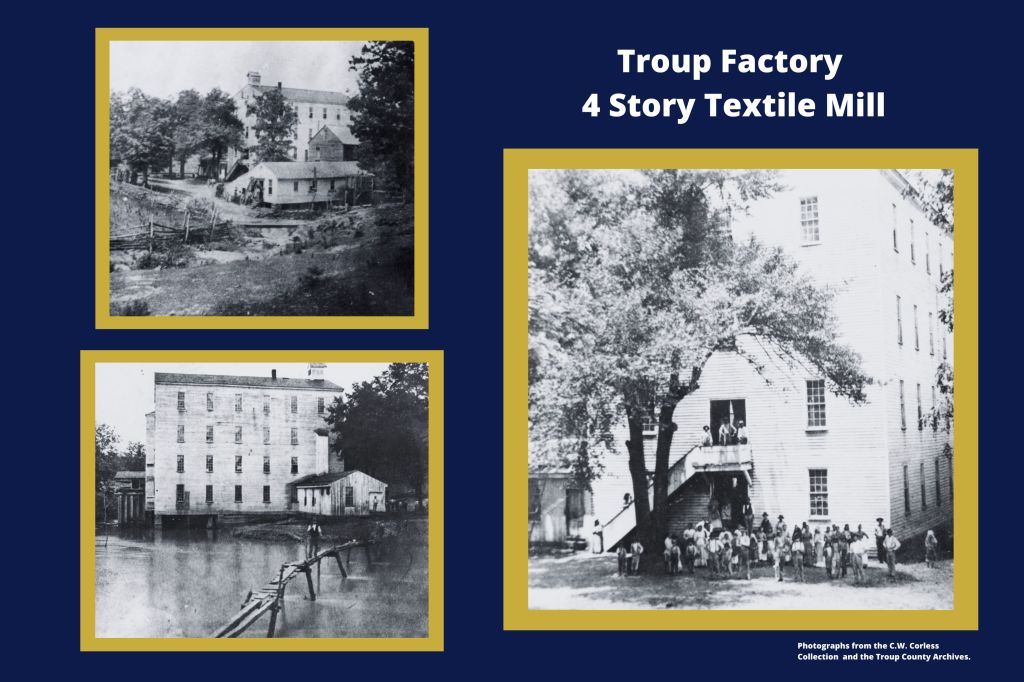
The Historical Center changes exhibitions every 6 months. The last exhibition was “Troup Factory Mill” and its its sudden disappearance. This fascinating story features a four-story cotton mill, a grist mill, a distillery, a blacksmith shop, and a home to more that 500 people.
The exhibit features an in-depth historical perspective of Troup Factory Mill, a 19th century cotton mill just a short drive north of Downtown Pine Mountain and the Chipley Historical Center near the Flat Shoals Creek bridge where U. S. Hwy. 27 crosses. Often referred to by locals as “Troup Factory Hill,” most residents probably don’t realize that it refers to what was actually a mill.
The Troup Factory area was settled starting in 1827, when Ann Anderson won Lot 240 in the Georgia land lottery. She sold her land to Maxi Brooks, who – with the power of Flint Shoals Creek – built a grist mill, distillery, and wool carding business.
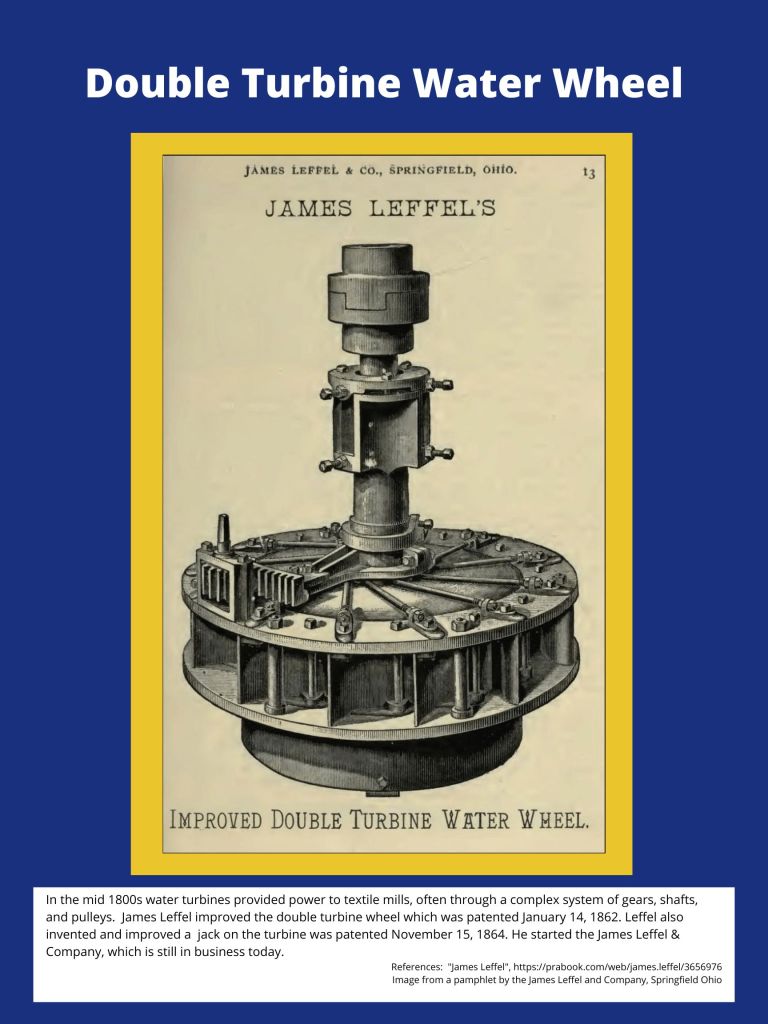
Brooks became partners with David Beeman, Isaac Beeman, Thomas Leslie, T. Molby, Alexander Ragland, and James Robertson forming Robertson, Leslie and Company. The partners financed the building of a four-story cotton mill, which used locally sourced cotton and became a town of over 500 people. They sold their cloth to buyers in the East. Managed by Maxi Brooks, the mill ran on water turbine power from 1827-1902 and did a good business, even winning a medal for their rough cloth.
Artifact donors include Patrick Severts, Nancy Williams, and Joanna Baxter, who all own portions of the land in reference. Severts, a local archaeologist, has done much of the excavation work to learn more about the 74-year-history of the tract. Photographs are, in part, courtesy of the Troup County Archives. An original painting by Tony Treverton is also part of the exhibit.
“Horace King: A Man Ahead of His Time”


Callaway Gardens & the Family





 Chipley Historical Center